Author Archives: fepoweditor

NFFWRA countdown to 2015 VJ Day Commemorations begins at Buckingham Palace

Already 2 years have passed since the National FEPOW Fellowship Welfare Remembrance Association (NFFWRA) began their initial preparations for their plans to commemorate the 70th Anniversary of the end of the war in the Far East (VJ Day) on 15th August 2015.

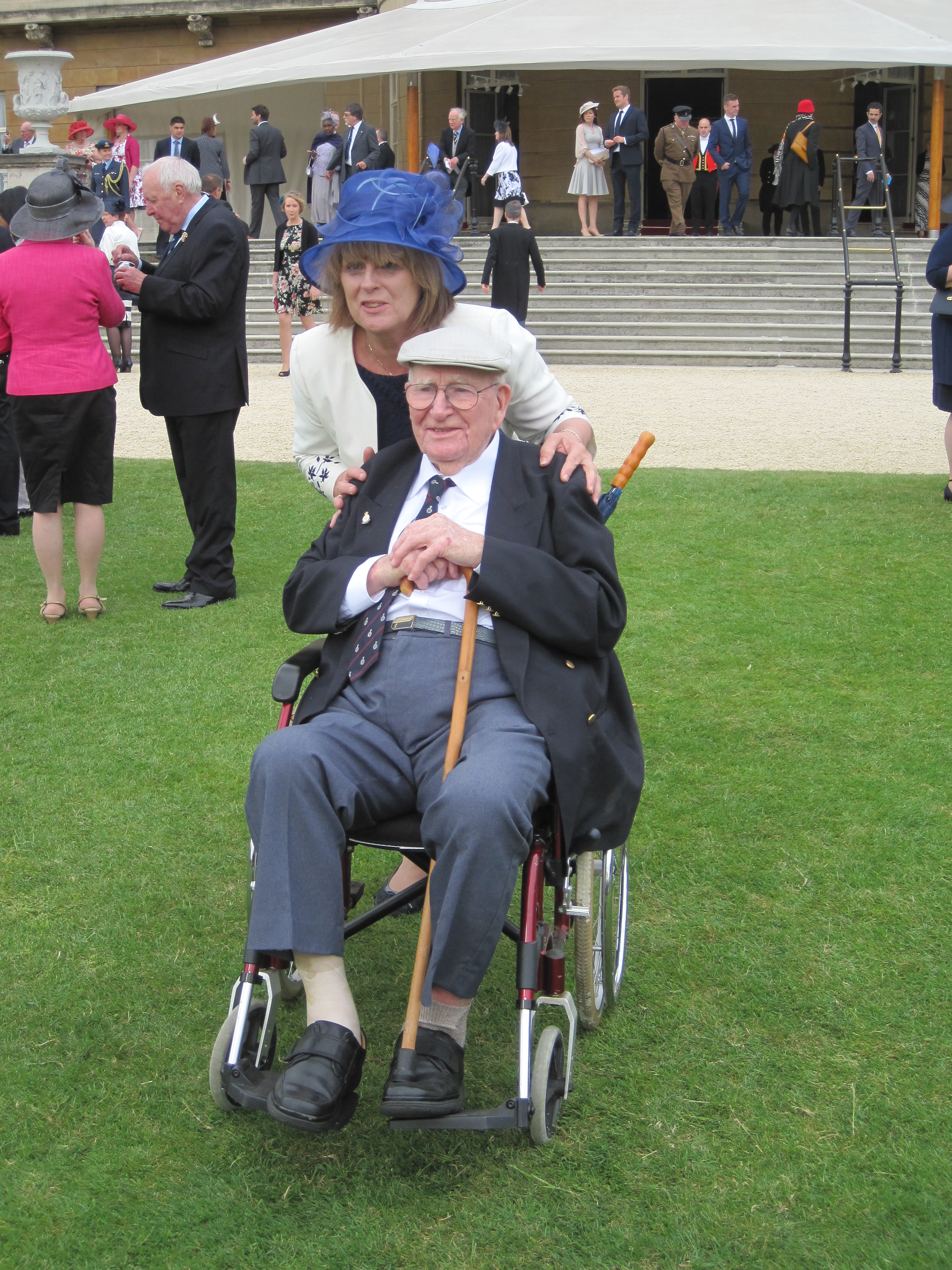
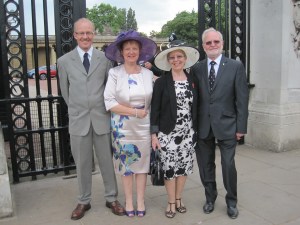
Buckingham palace 2014 023Although still a way off , the 14-month count down has now begun following a visit to Buckingham Palace on Wednesday 21st May 2014.

FEPOW Chaplain Mrs Pauline Simpson of Neatishead was the guest of the Association’s Patron HRH the Duke of Gloucester, at a garden party held at Buckingham Palace to celebrate the achievements of a variety of charities and organisations up and down the country, which are supported by members of the Royal family. Her husband Mr Jeremy Simpson, the Association’s Chairman and Treasurer, Mr and Mrs Tony Burrows, and FEPOW veteran Stan Burridge, 95, and Stan’s daughter Mrs Karen Woodford, accompanied Mrs Simpson. NFFWRA Secretary Pauline Simpson & her husband Jerry with Chairman Tony Burrows and his wife, Treasurer Lynda Burrows.

Buckingham palace 2014 009

FEPOW Stan Burridge with his daughter Mrs Karen Woodford

HRH the Duke of Gloucester, having been introduced to Mrs Simpson, went on to spend several moments with the group and was immensely interested in the activities of the Association and was pleased to be associated as it’s Patron. Following afternoon tea and the opportunity to enjoy the gardens, there followed a walk about by the Royal party in which the Duke of Edinburgh, Princess Beatrice, Princess Michael and the Duchess of Gloucester stopped briefly to chat with members of the FEPOW party.

The Association recognises that in the next 14 months the real hard work is now to begin with reaching out to all those FEPOWs still alive along with their families to bring this Anniversary to the nation’s attention – to remember the ‘Forgotten army’. A service is to take place in the Church of St Martin-in-the-Field, Trafalgar Square London on 15th August 2015 at 11am. The Rt Rev’d Nigel Stock, Bishop at Lambeth, who was recently appointed as The Bishop to the Armed Forces is to preach at the service. It is hoped that HRH the Duke of Gloucester will be in attendance.

Arrangements are being made with local coach and rail services in East Anglia to get the veterans and their families there and back whether it is just for the day or the weekend.

Accommodation has been organised at the Union Jack Club near Waterloo Station for those who wish to stay over on the Friday 14th August and/or the Saturday 15th August. On Saturday there will be an evening of ‘40’s entertainment, which follows a hot buffet later in the day (this will be free for all veterans, wives and widows).

Update on 8th July 2015 – the response for applications for tickets for the VJ Day service at St.Martin’s in the Fields and for the dinner at the Union Jack Club has been overwhelming and there are now no tickets available for either the service or the dinner. Anyone without a ticket who still wishes to attend the service please email enquiries@nationalfepowfellowship.org.uk  from 1st August 2015 to see whether any tickets have become available as a result of cancellations.

Poppy Planting 2013

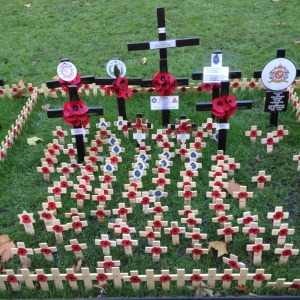
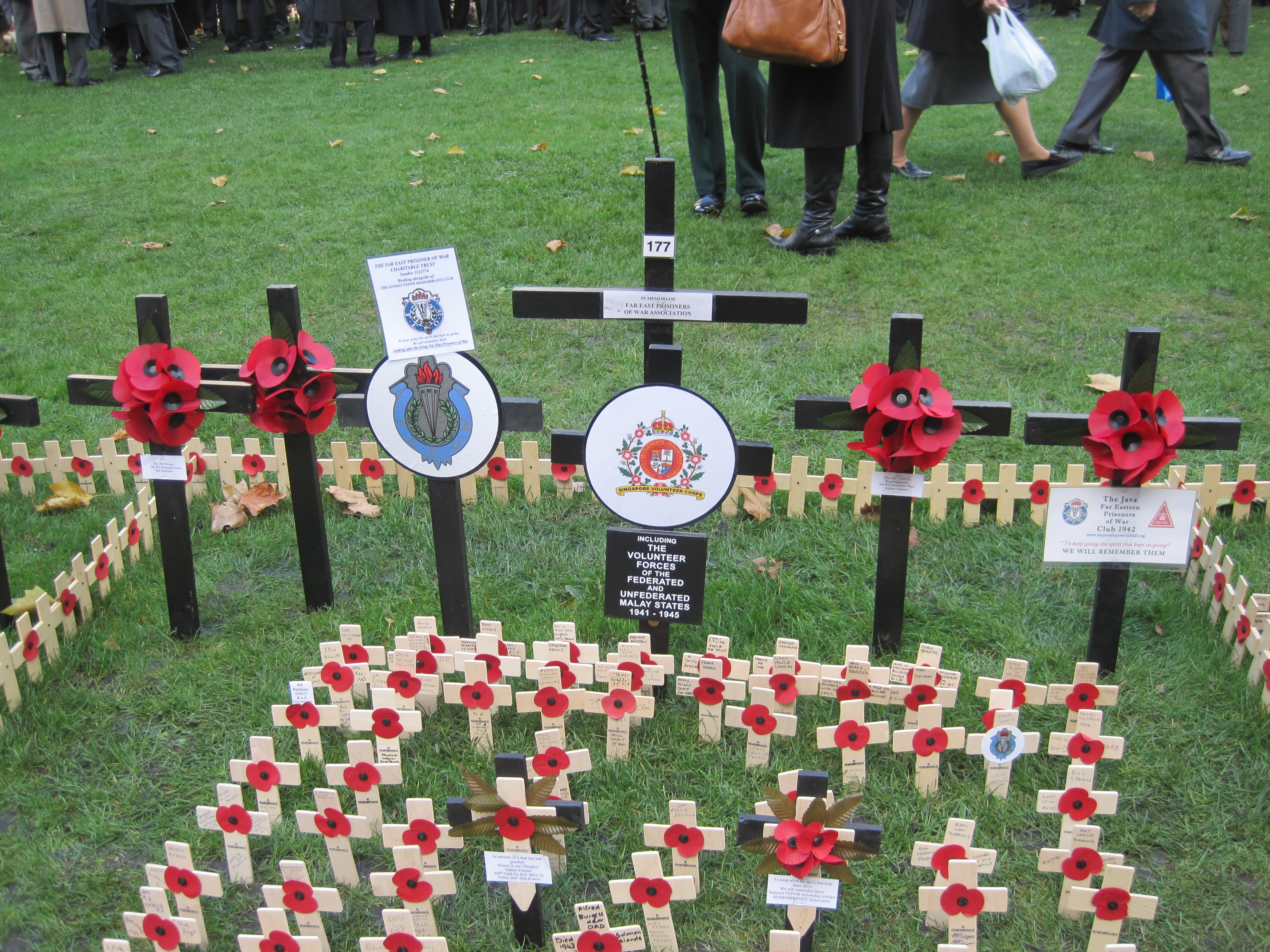
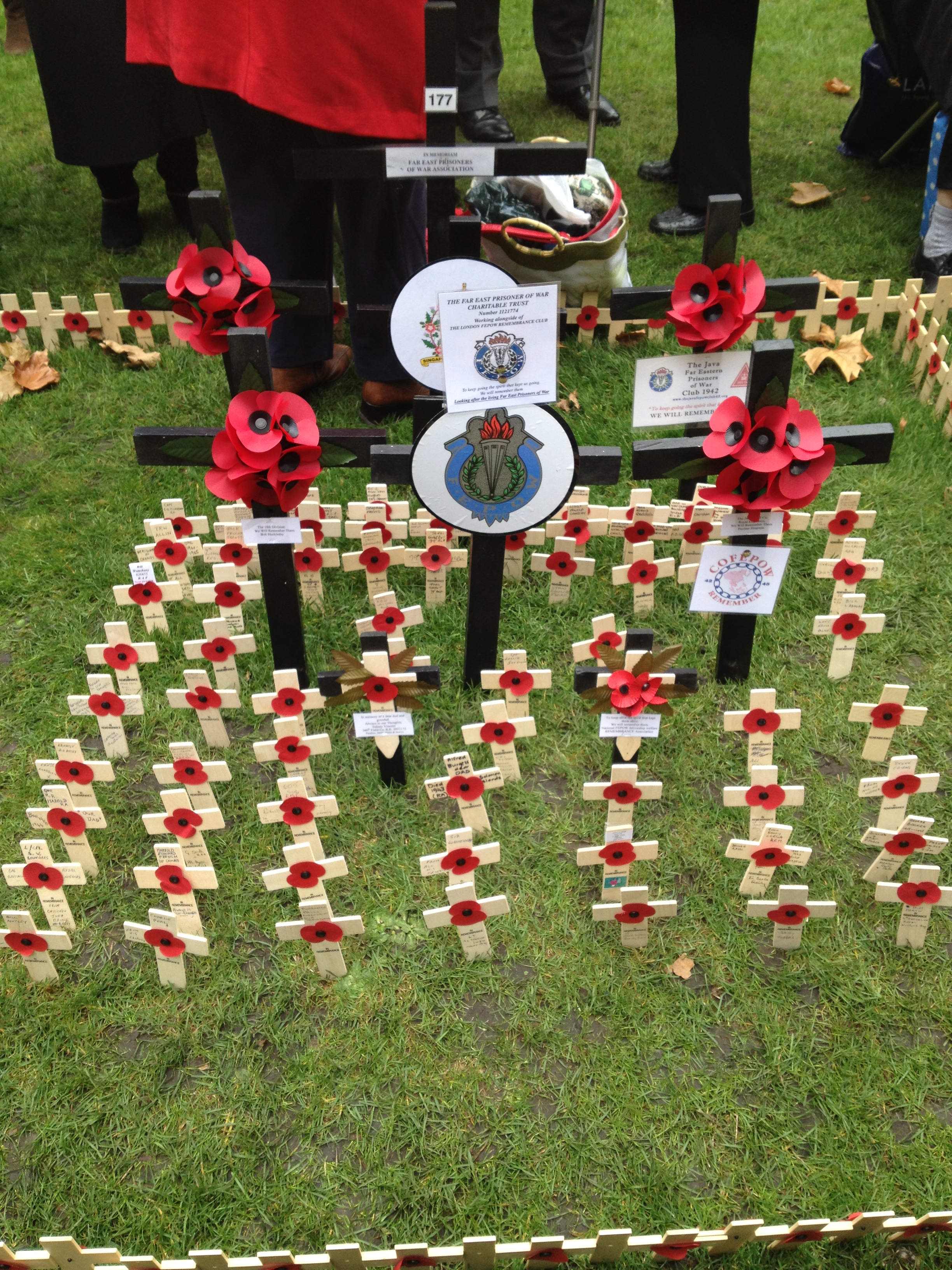
The FEPOW Poppy Plot

The FEPOW Poppy Plot at Westminster Abbey Fields of Remembrance in November 2013.

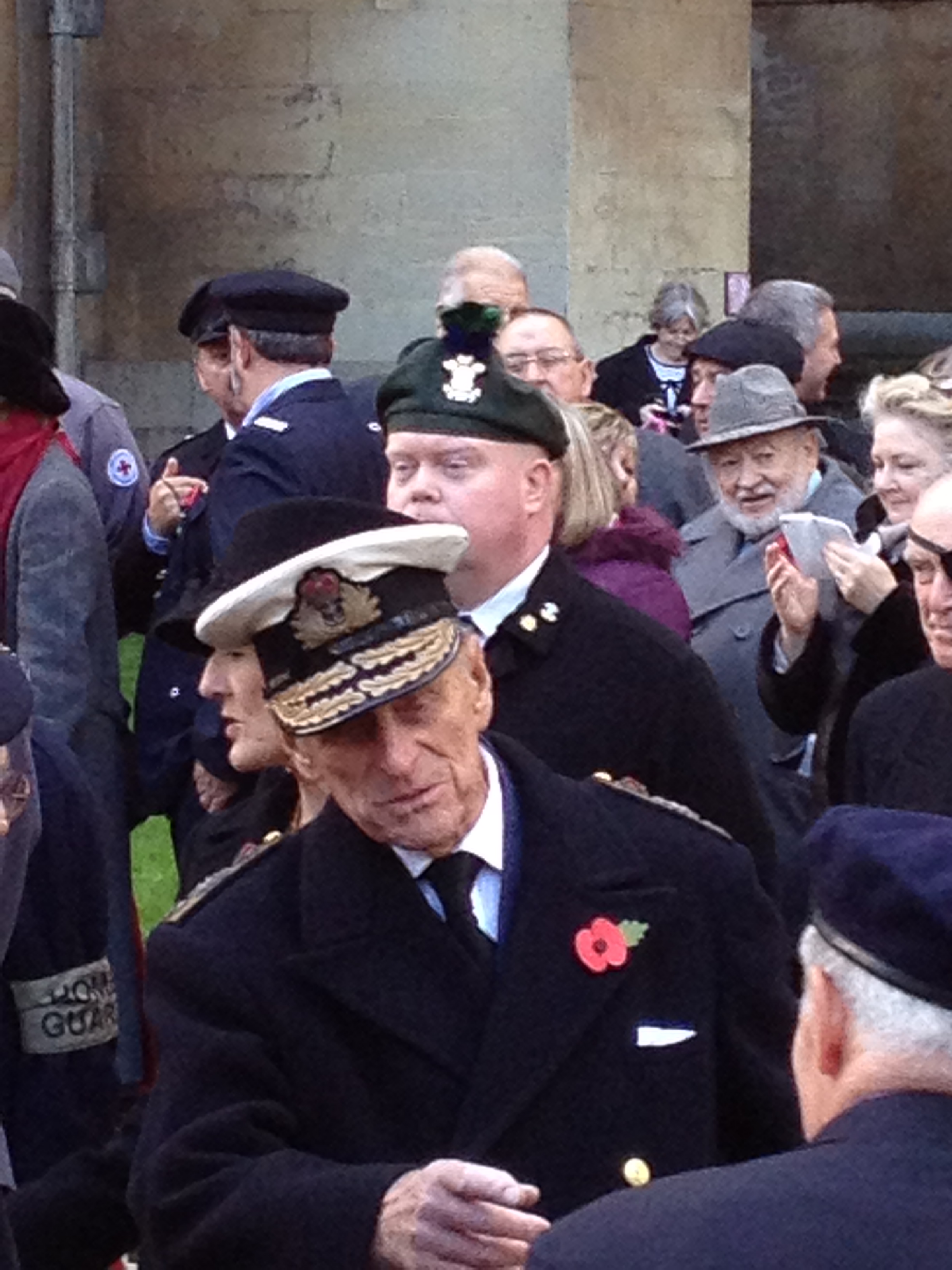
George Housego MBE represented all FEPOWs and was introduced to HRH Prince Philip, The Duke of Edinburgh and
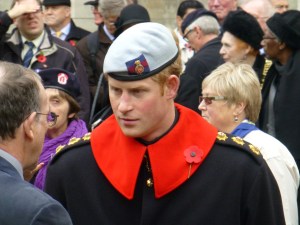
HRH Prince Henry of Wales attended the opening of the Fields of Remembrance for the first time.


HRH Prince Philip, The Duke of Edinburgh

HRH Prince Philip, The Duke of Edinburgh


HRH Prince Henry of Wales


FEPOW Plaque unveiled in Southampton

NFFWRA organised a 2 night stay in Southampton for Saturday 26th and Sunday 27th October 2013 to attend the unveiling ceremony of the FEPOW plaque dedicated to those who arrived in Southampton on their return from the Far East.

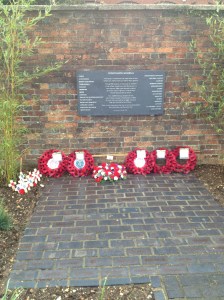
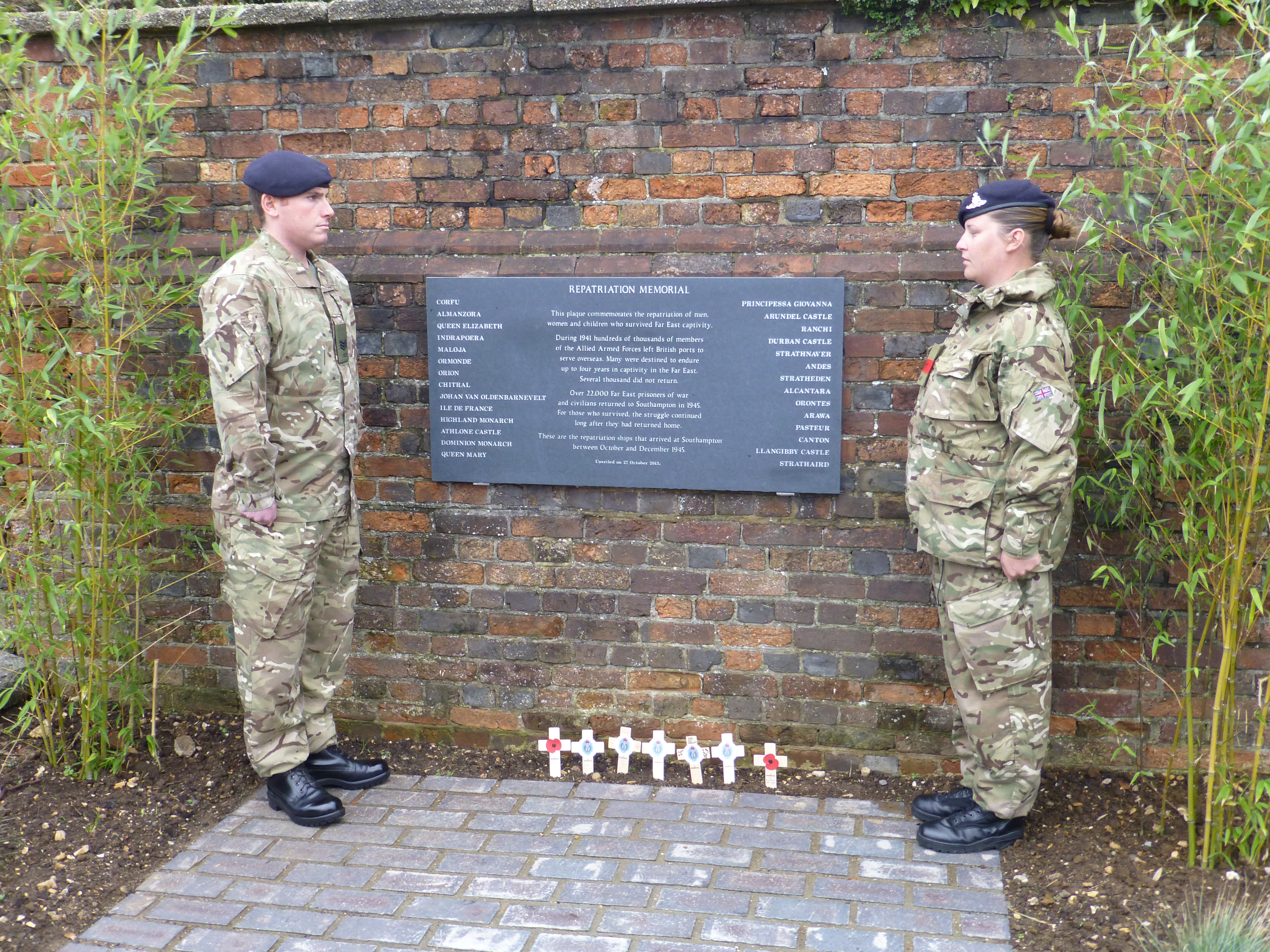
IMG_1299 The Researching FEPOW History (RFH) Group, led by Meg Parkes, was instrumental in erecting a Repatriation Memorial to mark the return of FEPOW and civilian internees to the port in the autumn and early winter of 1945.

The first Repatriation Memorial was erected on Liverpool’s Pier Head in October 2011.The very first ship to arrive back in Britain was the P&O liner, SS Corfu which docked in Southampton on 7 October 1945 with over 1,500 FEPOW and a few civilian internees on board.  Both plaques commemorate the arrival in British ports of over 37,500 FEPOW (British military personnel) and several thousand civilian internees (men, women and children.) All had spent up to three and a half years in captivity in South East Asia and the Far East. The majority, though not all, returned home by ship and disembarked in either Southampton or Liverpool.

The granite memorial has been erected on a wall within Southampton’s Town Quay Park, facing Southampton Water and the docks where the ships arrived. The park is run by a local community group, the Friends of Town Quay Park, and Southampton City Council agreed that such an important memorial should be sited within this small historic park. Town Quay Park, surrounded by the medieval city walls, is one of the few places where there is a good view of the waterfront so it is very fitting that the memorial overlooks where the POWs arrived home.

IMG_1324The area around the plaque has been landscaped with a sympathetic planting scheme including bamboo and grasses, helped by donations from NFFWRA members. The plaque, like the one in Liverpool, has been inscribed with a central dedication and flanked by the names of the ships that docked in each port.
FEPOW Bob Hucklesby, 93, the NFFWRA President, who lives in Bournemouth, has been a great supporter of the appeal. He vividly remembers arriving back in Southampton on board the hospital ship, Principessa Giovanna: “I shall never forget it. There on the quayside was a band to welcome us home and one tune I particularly remember was the Cole Porter hit, Don’t Fence Me In. The people of Southampton could never know what that welcome meant. We had all been away at least four years, some as long as seven. I am pleased that finally this piece of World War Two history, relating to the war in the Far East, is to be recorded in Southampton. Unfortunately, almost a quarter of those taken prisoner did not return.”

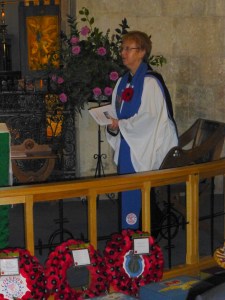
The service, held iP1050324n the Church of St Michael the Archangel, was an all ticket affair, and it was attended by the Deputy Lord Lieutenant of Hampshire, the Mayor and other local dignitaries. At least 13 FEPOWs and many relatives of FEPOWs and internees were there. The photograph on the cover of the Order of Service was of Tom Boardman playing the ukulele he made in Thailand, on his disembarkation from the SS Corfu in Southampton on 7th October 1945. It was a moving service, including a reading by Maurice Naylor, the Act of Remembrance led by FEPOW Chaplain Pauline Simpson, the NFFWRA Secretary, and the FEPOW Prayer given by Stan Vickerstaff, FEPOW Chaplain and NFFWRA Secretary Pauline Simpson.

IMG_1313

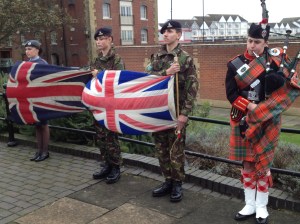
After the service there was a walk past the memorial led by a lone piper – fortunately the rain held off.

NFFWRA welcomed special guest Captain Tom Tulloch, Naval Advisor to the Canadian High Commission, and his wife Bonita. As it was too windy to lay the wreaths at the memorial on Sunday, the St. Jude gale hitting Southampton just a few hours later, they were laid around the altar rails in the church and moved to the memorial site on Monday. Refreshments were then provided at St.Joseph’s Hall giving us all a chance to talk and share our thoughts with FEPOWS, internees and their families.

That evening many NFFWRA members enjoyed a Thai meal at the Kutis Royal Thai Pier Restaurant, the only surviving part of the Royal Pier, opposite the memorial plaque and gardens. FEPOW Tom Boardman gave a heartfelt and moving address recalling his emotions on his return, and expressing his thanks, on behalf of himself and all of his comrades, to the people of Southampton who had turned out in large numbers that October day in 1945 to cheer and welcome the FEPOWs and civilians home. Tom paid tribute to those of his comrades who did not return. Later Tom’s son Ron told us how much thought his father had put into the various drafts of his short speech and it showed – the care to say what he wanted to is entirely typical of Tom.

P1050341

Our thanks go to Meg Parkes for inspiring the idea of the memorial and for ensuring the delivery of the memorial and service. Pauline Simpson, NFFWRA Secretary and the FEPOW Chaplain, played a key role in the events, delivering the Act of Dedication, and also organising a coach to Southampton, hotel accommodation and tickets for many FEPOWs, widows and their families. Pauline discovered as part of the preparations for the event that her father had returned from Rangoon on the ship SS Chitral on 28th October 1945. Additional photographs of the FEPOW Memorial dedication event are now available on the Researching FEPOW History Group’s Facebook page

Singing To Survive Concert Chichester

Singing to Survive Palembang Camp Sumatra 1943

Singing to Survive Palembang Camp Sumatra 1943

In October 2013, NFFWRA arranged for members to attend this extraordinary musical performance commemoration of the 70th anniversary of the first performance of the Women’s Vocal Orchestra created in the Civilian Internment camp at Palembang in Sumatra in 1943.

Margaret Dryburgh, the daughter of a Presbyterian Minister, who was the Principal of KuoChuam Girls’ School  in Singapore, and Norah Chambers, nee Hope, a music teacher in Singapore, both fled from Singapore just before it fell on 15th February 1942. By chance they were interned together in Sumatra after being captured on Bangka Island later that month.

Margaret Dryburgh

Margaret Dryburgh

Norah Chambers

Norah Chambers

After several moves in dreadful conditions they moved to a dilapidated barracks in the middle of the Sumatran jungle at  Palembang where 600 women and children were crammed into this insanitary compound with 50 to a hut and just 27 inches of bed space.

This was the internment camp upon which the BBC TV series Tenko was based. To restore morale and to overcome the language difficulties (there were 21 nationalities in all, although  the original Palembang vocal orchestra was made up principally of British, Dutch and Australian women) Norah Chambers had the inspired idea to form an orchestra by using women’s voices in place of musical instruments. She and Margaret Dryburgh wrote from memory the music of various pieces on little scraps of paper that they could find. They then set about condensing complex classic works, taking main themes with the right modulations and harmonic changes and weaving them into miniature works – complete in themselves. Instead of words they would hum, la or sing vowels to the music.

St Paul’s ChurchThis 70th anniversary celebratory concert was performed by the Chichester Women’s Vocal Orchestra (which had been created for this concert) at St. Paul’s Church, Chichester because one of organisers of the event is a member of the church and is the daughter of Shelagh Lea (nee Brown) one of the survivors from the prison camp who was a member of the vocal orchestra.  Shelagh was interned with her mother who subsequently died in captivity and is buried at Palembang. The concert was organised by five women who each have a deep and abiding interest in the history of internment in the Far East during World War II. They are: Dr Bernice Archer PhD, author of The Internment of Western Civilians under the Japanese 1941-1945: A Patchwork of Internment (2005) Margaret Caldicott, flute teacher and daughter and granddaughter of two of the Palembang women (Shelagh Lea, nee Brown and Mary Brown) Barbara Coombes (MA), lecturer and biographer of Margaret Dryburgh and Shelagh Lea Meg Parkes MPhil, a researcher in WWII Far East captivity and author of two books based on her father’s Far East POW experiences Lavinia Warner, author of Women Beyond the Wire (1982), which tells the story of the women and Palembang and the creation of the Vocal Orchestra. Lavinia, an independent film and TV producer, created and storylined the successful 1980’s TV series Tenko which gave a fictionalised account of the experiences of the women and children imprisoned by the Japanese. It was during the Researching Far East POW Group conference at the National Memorial Arboretum in 2011 that Meg Parkes first suggested to Bernice Archer the idea of organising a concert in 2013 to mark the 70th anniversary of the Vocal Orchestra’s creation. Margaret Caldicott, Barbara Coombes and Lavinia Warner eagerly supported the idea. The organisers shared the belief that the women of Palembang, and in particular Norah Chambers and Margaret Dryburgh, should be remembered and honoured for their courage, tenacity and creativity. Their example is as vital and life-enhancing today as it was 70 years ago. All felt a duty to bring this history to life for a new generation and to encourage anyone who is inspired by it to mark the 70th anniversary (or any future anniversaries) in their own way. The narrators of the concert, who told the story of the vocal orchestra, and read poems written by some of the internees, in between the music, were the well-known and accomplished actresses, Stephanie Cole and Louise Jameson. They, and Veronica Roberts, who was the concert’s producer, were very familiar with the story of the women prisoners of the Japanese having all previously starred in Lavinia Warner’s drama Tenko. To close the concert the audience joined with the Vocal Orchestra to sing the words of The Captives Hymn which was composed by Margaret Dryburgh in 1942 and was sung originally at a camp Sunday service.  Thereafter it was sung every Sunday throughout their years in captivity. This same hymn was sung at the Service of Dedication to the Repatriation Memorial at The Church of St. Michael the Archangel in Southampton the next day.

The concert was sponsored by the Malayan Volunteers Group  and any profit will be divided between a memorial for those civilians who died in this area of Sumatra and the local school in Kampong Mengelang village in Muntok, on Bangka Island, Sumatra.

Those of us privileged to be present for this moving and historic performance were astonished to learn afterwards that the all women choir had only been rehearsing for six weeks. More details about the concert can be found at website http://singingtosurvive.com/ The Singing to Survive concert was professionally filmed in full so that it can be retained as an important record for the Imperial War Museum and other archives. A documentary about the vocal orchestra incorporating footage of the concert is also in the planning stages which may eventually be made publicly accessible.

68th Anniversary of VJ Day Norwich 2013

VJ Day 2013 Norwich

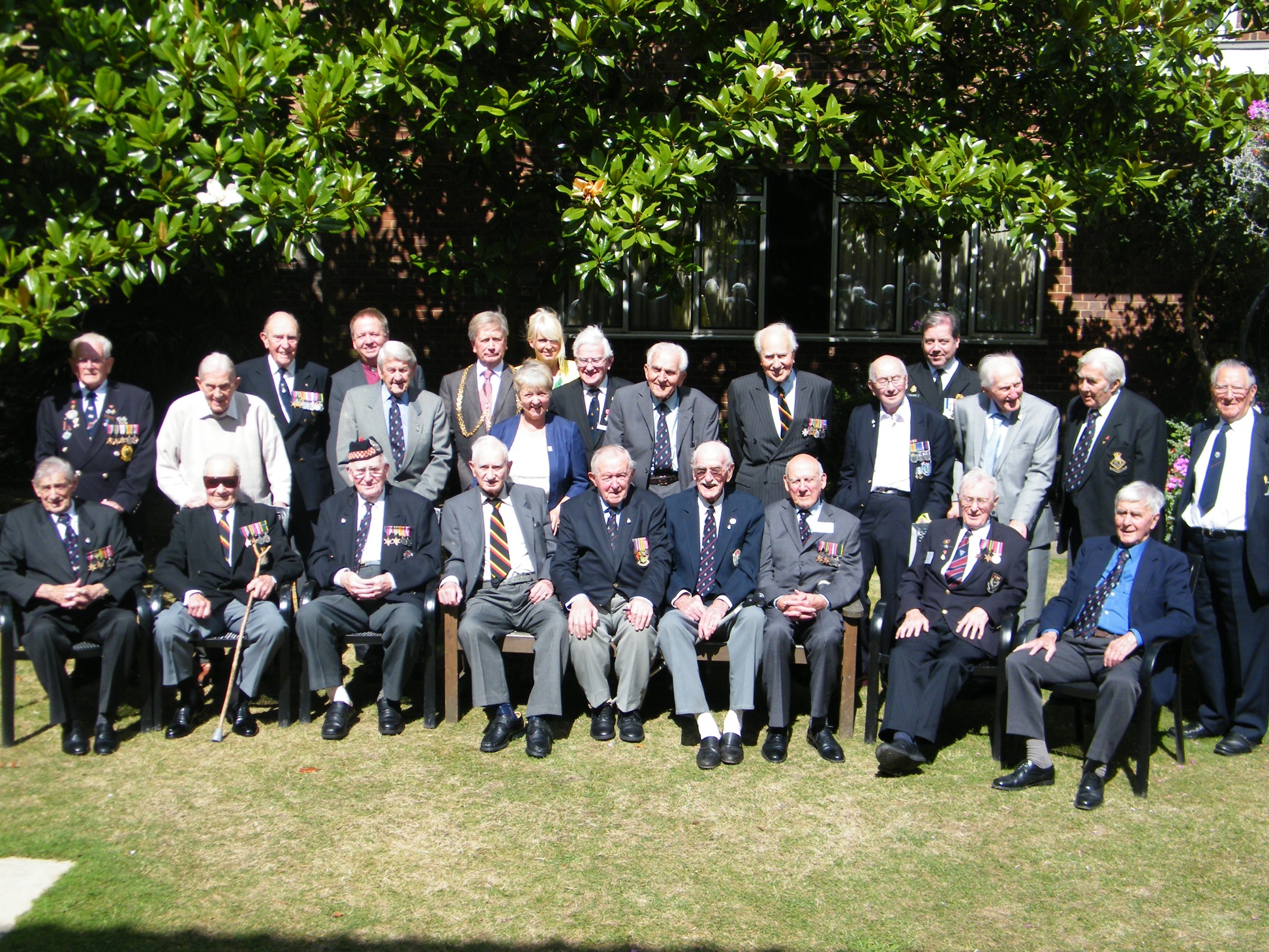
This photo of FEPOW veterans was taken after a powerful and moving service of Remembrance and Thanksgiving at the Church of St Peter Mancroft Norwich on Thursday August 15th 2103 on the 68th Anniversary of VJ Day.

Also in the photograph are the Right Reverend Alan Winton, Bishop of Thetford, who preached at the service, Captain Tom Tulloch, Naval Advisor to the Canadian High Commission with the Sheriff of Norwich, Mr Graham Creelman and Mrs Vivica Parsons and the FEPOW Chaplain Mrs Pauline Simpson.

The Deputy Lord Lieutenant Mr Charlie Barratt (son of a FEPOW) was also present although he is not in the photograph.

The photo was taken after the service at the Norwood Suite, Assembly Rooms where 100 guests enjoyed a buffet lunch organised by the National FEPOW Fellowship Welfare  Remembrance  Association (NFFWRA).

Mrs Robin Eaton, widow of Tom Eaton, former President of the Norwich FEPOW Association who arranged the FEPOW Memorial in the Church of St Peter Mancroft in 1987, read a lesson at the service and her son and 2 grandsons laid a wreath at the memorial. Major Reeve (Royal Norfolk’s) and a former Trustee of the Central FEPOW Welfare Fund also read a lesson.

We were honoured to have with us one of our NFFWRA Patrons Patrick Toosey, the son of Lieutenant Colonel Philip Toosey, who was put in charge of constructing the Bridge On the River Kwai by the Japanese.

Around 200 people attended the service including the 20 FEPOWs, spouses and many widows of former FEPOWs.

NFFWRA Reunion at Worthing 27th to 30th June 2014

The 2014 NFFWRA Reunion is to be held at the Chatsworth Hotel, Worthing from Friday 27th June to Monday 30th June 2014 as part of the Armed Forces weekend – to include Armed Forces Day on Saturday 28th June 2014.

For more details details please contact enquiries@nationalfepowfellowship.org.uk

VJ Day Remembrance Service at St Peter Mancroft Church Norwich 15th August 2013.

A Remembrance Service is to be held at St Peter Mancroft Church in Norwich to commemorate the Anniversary of VJ Day on Thursday August 15th 2013 at 11am.

St Peter Mancroft Church is home to a stone plaque with FEPOW badge, unveiled and dedicated on 15th February 1987. This plaque was organised by the Norwich Fellowship of prisoners of war, there is also a small FEPOW Chapel within the church with much information of interest of this era. The Bishop of Thetford, the Right Rev’d Alan Winton has accepted an invitation to preach.

Following the service, a buffet lunch with tea and coffee will be provided free of charge for FEPOWs, wives and widows, at the Norwood Suite, Assembly Rooms, opposite the Church. A charge of  £20 per person is payable in advance for other attendees. There will be a team of people attending to the veterans, in the event that family members would prefer to explore the City of Norwich, shop or lunch

For more details see the Upcoming Events page

View the FEPOW Poppy plot at the Field of Remembrance Westminster Abbey


Poppy Crosses

NFFWRA assists the named representative with the administration of the FEPOW plot at the Field of Remembrance at Westminster. This is in order to enable poppy crosses to be planted in memory of the Far East Prisoners of War.

Representatives from the London FEPOW Remembrance Social Club currently plant the poppies.

The opening ceremony takes places on the Thursday prior to Remembrance Sunday and is usually attended by a senior member of the Royal Household, who then conducts a review of the plots.

IMG_1009

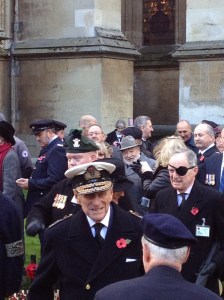
HRH The Duke of Edinburgh greets FEPOW representative George Housego MBE

Hayling Island 2012 079

The FEPOW Poppy Plot


P1050598

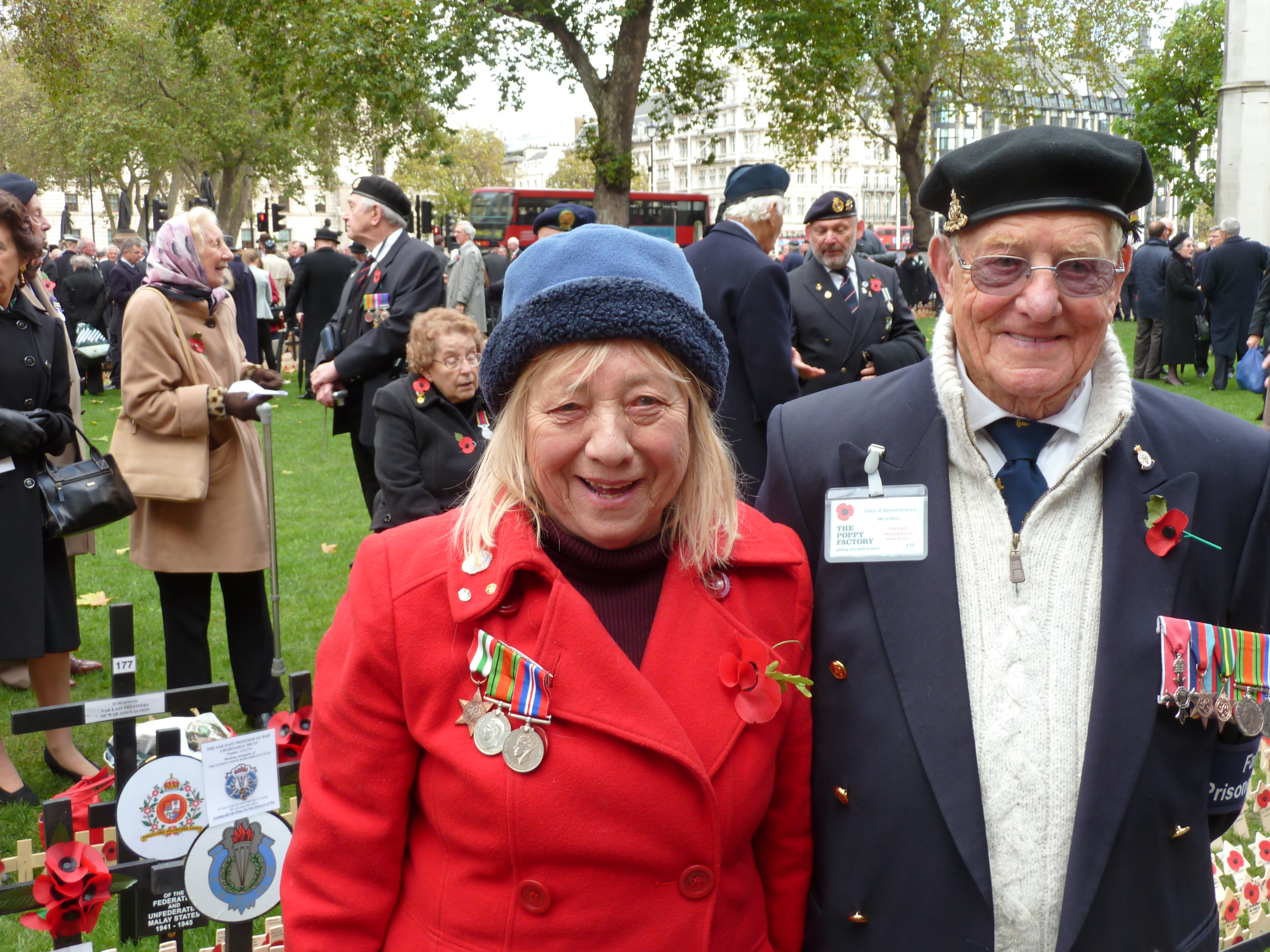
George Housego MBE and his partner June Elkington-Housego


The Address by the Bishop of Ely at the 70th Anniversary of the Fall of Singapore Service of Remembrance in Ely Cathedral

2012 marked the 70th anniversary of the beginning of World War II in Southeast Asia.

The Fall of Singapore to the Japanese on 15th February 1942 was a historic event that changed the destiny of millions of people.

On 12th February 2012, in Ely Cathedral, the Bishop of Ely, The Right Reverend Stephen Conway, looked at how local people were caught up in one of the British Armed Forces most difficult moments in its long and complex history.

Here is the sermon preached by the Bishop of Ely at Ely Cathedral on 12th February 2012:

“It is a great privilege to be speaking to you at this special 70th anniversary of the Fall of Singapore. It is very fitting that we should be celebrating in Ely as the Eighteenth Division which served in the Far East was made up of East Anglian Regiments. The BBC recorded lots of testimony from former soldiers about the Fall of Singapore. ‘Snowie’ Baynes described the surrender when it came and how devastating that it was, with big men laying down their arms with tears streaming down their faces through the humiliation of it all. Many of General Percival’s troops were completely un-bloodied, over against Japanese veterans of the war with China. Singapore fell to the Japanese imperial army on 15th February, 1942. The Japanese had already systematically destroyed the air and sea capability of the British forces. Only the army remained. The collection of intelligence and the leadership failed dismally and a long, strung-out inland front of seventy miles left most troops incapable of dealing with a fast, concentrated and savage force of 20,000 Japanese soldiers. It remains one of the most conspicuous and humiliating defeats ever suffered by the British Army during the whole imperial period.

All the defensive operation assumed that the invasion would come by sea, and not through the Malay swamps and marshes. All the British defences were facing the sea. Most people pooh-poohed the fighting capacity of the Japanese troops because they had only fought against Chinese and Manchurian troops hitherto. They actually revealed an astonishing speed of reaction, and a level of ruthless savagery which was unprecedented and terribly cruel, intentionally. We remember all the British and Australian people who were killed; and we also remember the many thousands of Chinese people who were automatically slaughtered.

The Anglican Church in Japan apologised for all this savagery at the Lambeth Conference in 2008. We know, however, that the resonances of this kind of savagery can still be found in conflicts of today – in the disregard for human life by suicide bombers, in the wicked fighting already underway between North and South Sudan and in the heartless violence of the Syrian regime against its own citizens. We stand by all those who are asserting their humanity in justice and the service of others.

Most of us here are second hand keepers of the memory of Singapore. I know at least one senior retired officer who is here because his father was a POW among so many who suffered so terribly during three-and-a-half years of brutal captivity. For most of us, our sense of what people went through is conditioned not by direct memory, but by listening to our fathers, by reading heart-rending memoirs, like those of Dr Harold Churchill, an army medical officer who did all he could to tend prisoners in Changi Jail during the occupation, keeping a record on rice paper which he hid and buried in a tin, sincerely believing that no one would believe that he was not exaggerating the cruelty of the Japanese. We are grateful for such accounts because most survivors of that dreadful period have chosen not to speak about it. The pain of recollection brings back all the losses and the hardships. The father of a friend of mine was a POW survivor of Singapore. He came home robbed of most ordinary emotional reactions. His son, my friend, had never received a hug from his father. Imagine how he describes the scene even now when he scored the winning try for his school at rugby and saw his father running towards him with arms widespread to gather him up in victory. At last, Dad had a victory worth celebrating.

On the subject of sport, some people here will remember the well-known cricket commentator for the Daily Telegraph and BBC, Jim Swanton, who died aged 92 in the millennium year. He was a Bedfordshire Yeomanry veteran who was a POW in Singapore. He was a very devout Anglo-Catholic Anglican who maintained what he regarded as proper standards even in the POW camp. It is alleged that as Major Swanton, he put three other officers on report in the camp for not bowing properly to the makeshift altar he had built while they were building the railway. People had all sorts of ways of surviving. For him that was through two major religions, cricket and Christianity. Although they never understood it, the Japanese allowed cricket to be played, however much they mostly despised Christianity.

We usually think of Balkan countries like Serbia as those who put their greatest remembrance and celebration into their worst defeats. Today we are united in our thanksgiving for the veterans – soldiers, civilians and children, priests and nuns – who were caught up in a great surrender of what everyone thought was an impregnable fortress. We are not here to white wash Generals Percival or Wavell. We are not here to pretend that it was all alright in the end. This was a defeat of such magnitude that Winston Churchill was glad to have been on his own to receive the news because he was so singularly moved and devastated and it would have been dreadful for general morale for his reaction to have been public.  Thousands died during the construction of the Railway of Death. No, we are here to celebrate the resilience and courage of the human spirit which enabled people to endure the worst possible assaults and provocation of an occupying power which had contempt for any weakness in itself and so externalised this onto a population which it despised for having surrendered and had free reign to punish. We can only imagine the daily, even hour-by-hour courage of those who were determined not so much to survive as to sustain some element of human dignity by helping others and by sustaining a quiet resistance to the Japanese.

One of the people who exemplified this was Bishop Leonard Wilson, who had become Bishop of Singapore only in 1941, having previously served in Hong Kong. Initially after the Japanese invasion of Singapore, the presence of a Japanese Christian as a minister in the occupied territories of Malaya meant that Wilson was allowed to continue to move about and visit both Changi Prison and the POW camps. He was determined to maintain links between all groups of detainees. Because he served to keep up some morale, he was accused of being a spy and found himself being tortured savagely. Often he had to be carried back to the crowded, dark and filthy cell, almost unconscious from his wounds. He recalled in a broadcast sermon in 1946 how he often felt: “I remember Archbishop Temple in one of his books writing that if we pray for any particular virtue, whether it be patience or courage or love, one of the answers that God gives to us is an opportunity for expressing that virtue. After my first beating I was almost afraid to pray for courage lest I should have another opportunity of exercising it, but my unspoken prayer was there, and without God’s help I doubt whether I should have come through. Long hours of ignoble pain were a severe test. In the middle of that torture they asked me if I still believed in God. When by God’s help I said ‘I do’, they asked me why God did not save me, and by the help of His Holy Spirit I said, ‘God does save me. He does not save me by freeing me from pain or punishment, but He saves me by giving me the spirit to bear it,’ and when they asked me why I did not curse them I told them that it was because I was a follower of Jesus Christ, who taught us that we were all brethren.”

He asked himself then how he could possibly love these men with their hard, cruel faces, who were obviously enjoying the torture they were inflicting. As he prayed he had a picture of them as they might have been as little children, and it’s hard to hate little children. But then, more powerfully, his prayer was answered by some words of a well-known communion hymn which came to his mind: “Look Father, look on his anointed face, and only look on us as found in him.” In that moment he was given a vision of those men not as they were then, but as they were capable of becoming, transformed by the love of Christ. He said he saw them completely changed, their cruelty becoming kindness, their sadistic instincts changed to gentleness. Although he felt it was too blasphemous to use Christ’s words “Father, forgive them,” he experienced the grace of forgiveness at that moment.

After eight months he was released back to Changi—one of the few who survived. For the rest of his life he emphasised in his speaking and preaching the importance of forgiveness. This is a living example of our first reading from Romans, that we should leave vengeance to God and should seek to overcome evil with good. It was precisely because of Wilson’s attitude and courage that one of his guards became a Christian and repented of all that he had done.

One of the particular areas of thanksgiving for us today is the way in which people cared for one another as friends, in spite of the degradation the Japanese inflicted. Wilson recalled how hungry they always were.   “I do not know how many of you know what real hunger is, but the temptation to greed is almost overwhelming. Here again we were helped. There was a young Roman Catholic in the cell. He was a privileged prisoner; he was allowed food from the outside. He could have eaten all of it and more than all of it, but never a day passed without his sharing it with some people in the cell. It was a small amount we got, but what an enormous difference it made. It raised the whole tone of our life and it made it possible for others to follow his noble example and to learn to share with one another.”

All veterans still alive and with us today have experienced depths of suffering beyond what most of us can imagine. We honour the sacrifice of all those who died fighting the Japanese, those who died during their imprisonment and all those who have died since the liberation after years of further physical and emotional pain. Bishop Wilson went on to become Dean of Manchester and then Bishop of Birmingham. We celebrate the productive lives which so many survivors were able to live and we honour their contribution to our peace time society. After seventy years, there are not many veterans still with us; but their great courage must not be forgotten. We do remember and shall remember what they have taught us about sacrificial friendship after the pattern of Christ himself. We entrust them all to Jesus who is the way, the truth and the life. Amen.”
Poppy Planting 2012

IMG_1003

The FEPOW Poppy Plot in the Fields of Remembrance at Westminster Abbey November 2012

IMG_1008

HRH the Duke of Edinburgh and George Housego MBE

P1120014

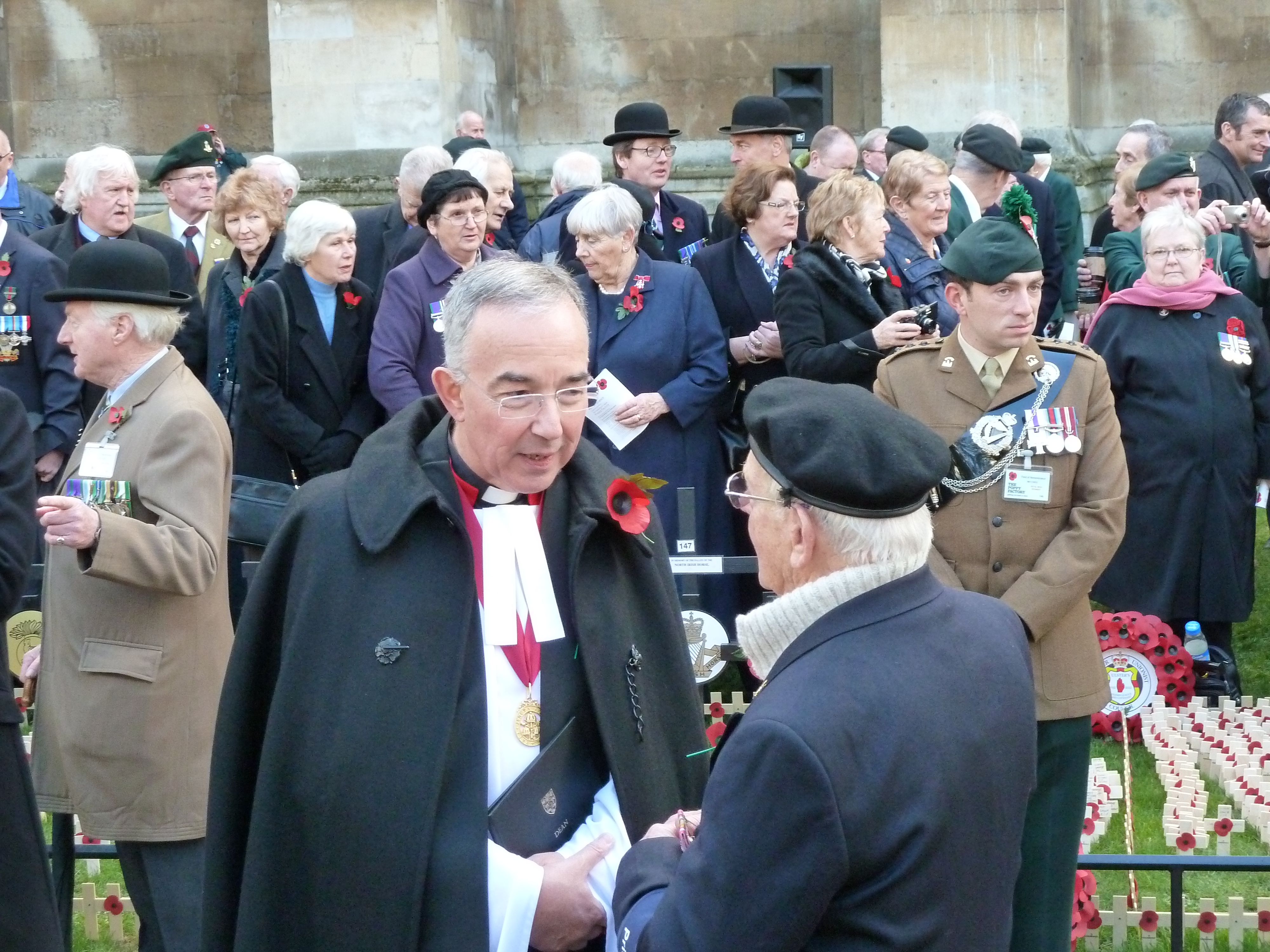
The Dean of Westminster greets George Housego MBE


P1110974

June Elkington – Housego and George Housego MBE at the FEPOW Poppy Plot